Living in Perugia
Perugia, a University City in the Heart of Italy
Perugia is a university city in central Italy, built on a hill and shaped by centuries of history. Study spaces, everyday services and cultural venues are spread across the centre and nearby areas, while the higher parts of the city open onto the Umbrian hills.
About Perugia
An old historic centre that remains part of the city’s everyday life.
Perugia is the capital of Umbria and a university city. Its historic centre occupies the top of the hill, where ancient remains, medieval lanes and stairways still form the structure of the old city.
University buildings, services, shops and homes occupy the same urban area. Students, workers and residents move through the centre every day.
The continuity between a city shaped over centuries and the way it is used today is one of Perugia’s most distinctive features.
Perugia in the Heart of Italy
The capital of Umbria, among the hills of central Italy.
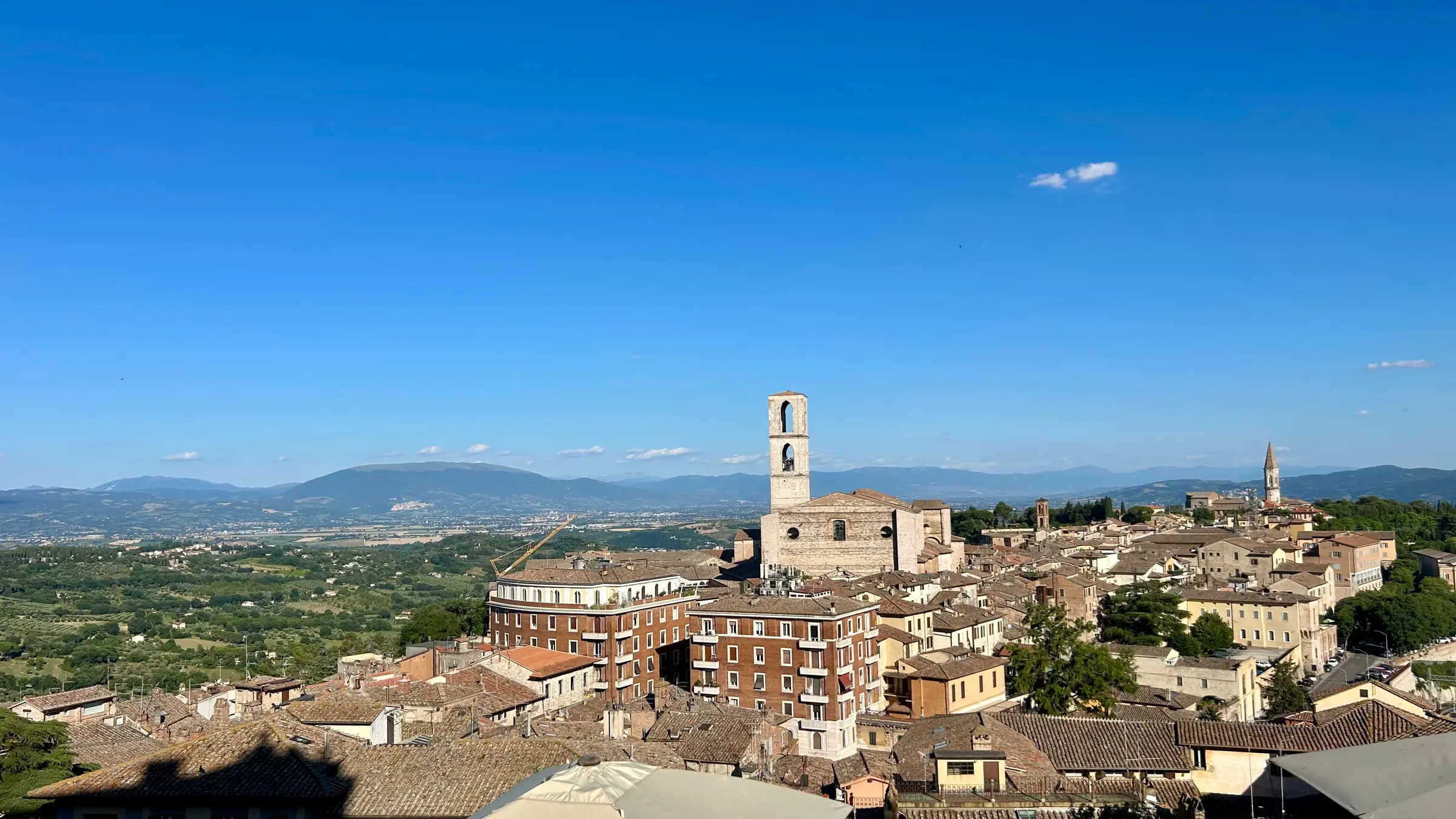
Perugia lies in the central part of the Italian peninsula. The city stands on high ground, surrounded by the rolling landscape characteristic of Umbria.
Assisi and Gubbio are in the same region, while Lake Trasimeno lies to the west. Historic towns and natural landscapes are therefore part of Perugia’s immediate surroundings.
Rome and Florence can be reached by rail and long-distance bus, with further connections towards Tuscany and other parts of central Italy.
Perugia’s position connects the Umbrian region with the main cities of central Italy.
A Different Pace from Italy’s Major Cities
Many everyday places lie close together, in a city shaped by hills and stairways.
In the historic centre, universities, squares, shops and services are relatively close to one another. Distance also means elevation here: slopes and stairways are part of daily journeys, many of which are made on foot.
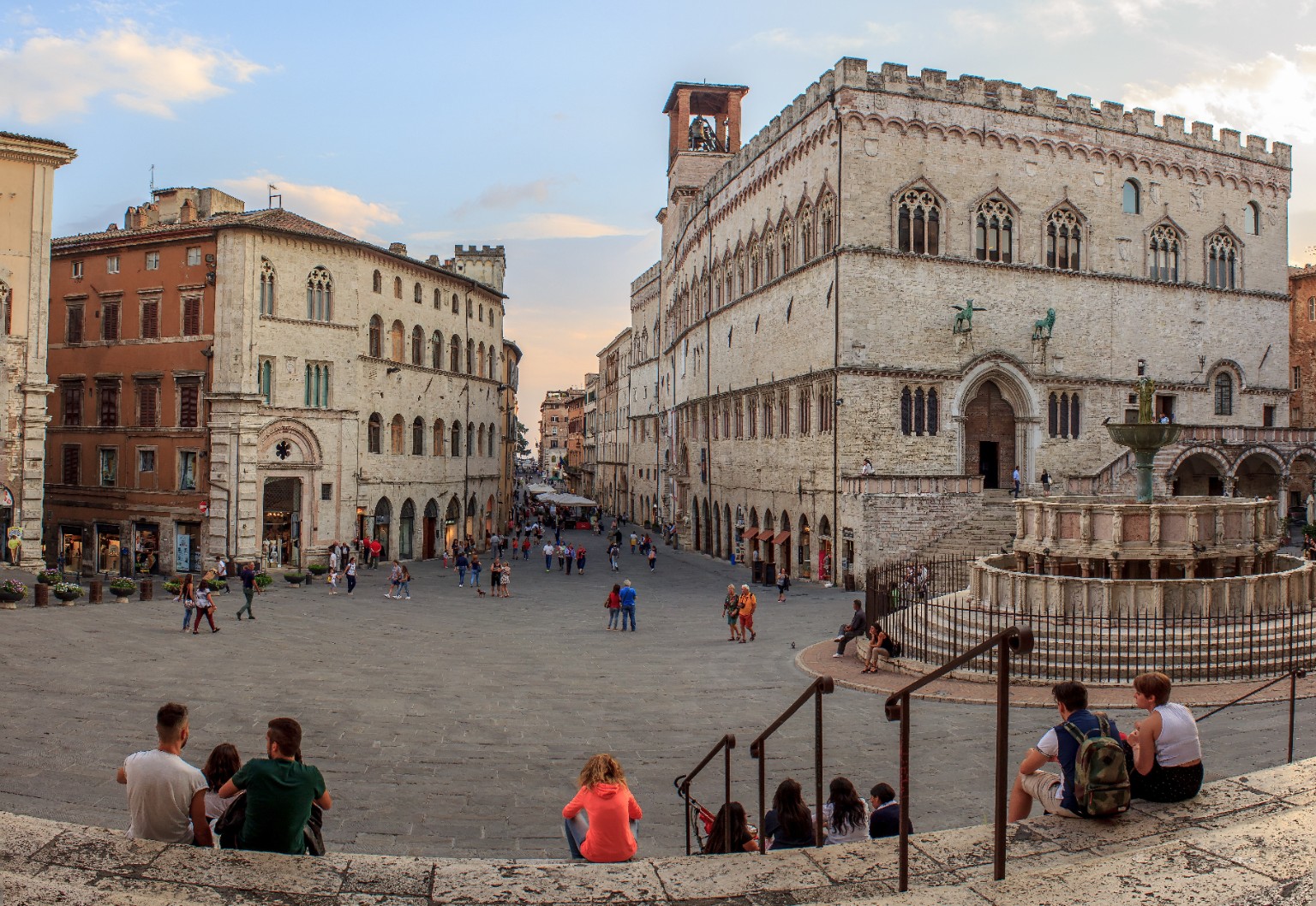
Piazza IV Novembre and Corso Vannucci recur throughout the day — on the way to class, to meet someone, to shop or to cross the centre. Students and residents often pass through the same streets and squares more than once.
Study, errands and meetings can all be connected within the same part of the city.
The proximity of places and the repeated use of familiar routes help define Perugia’s urban pace.
Living with History
Walking through Perugia means moving through a city shaped by centuries of history.
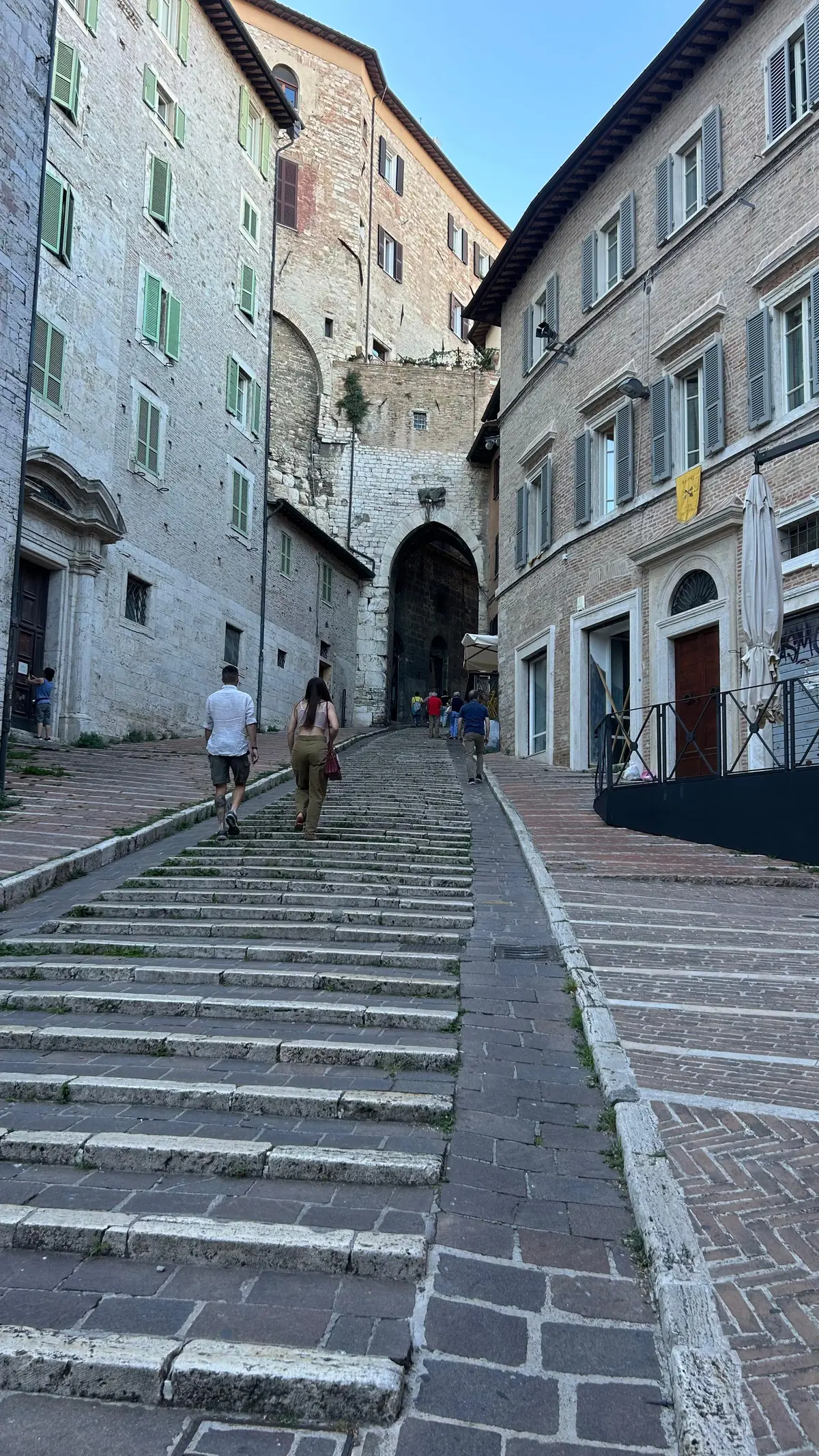
The historic centre still preserves walls and gateways from the Etruscan period, dating to the fourth and third centuries BC. The Etruscan Arch and Porta Marzia keep traces of the ancient city visible along routes that are still used today.
In the southern part of the centre stands the Rocca Paolina, built in the sixteenth century around earlier buildings and streets. Porta Marzia was also incorporated into the fortress.
Today, escalators link Piazza Partigiani with Piazza Italia through the underground spaces of the Rocca. Entering the centre from this side means passing through the sixteenth-century fortress and alongside traces of the city that came before it.
Gates, walls, underground passages and stairways still belong to Perugia’s everyday routes.
Perugia e i sotterranei della Rocca Paolina
lavoroperviaggiare
University and the City
University buildings and student activities extend into the city itself.
The University of Perugia maintains several sites in and around the historic centre. The historic headquarters of the University for Foreigners of Perugia, Palazzo Gallenga Stuart, stands beside the Etruscan Arch.
Both universities also welcome students from abroad through their courses and mobility programmes. The university presence can therefore be seen in its buildings and in the students who move through the city each day.
Academic life also reaches public spaces: outreach initiatives, cultural activities and university projects make use of squares and other places around the city.
University and city therefore share part of the same everyday geography.
Universita per Straniere di Perugia
Familia Sanchez
Everyday Life in Perugia
Between classes, a small set of places gradually becomes familiar.
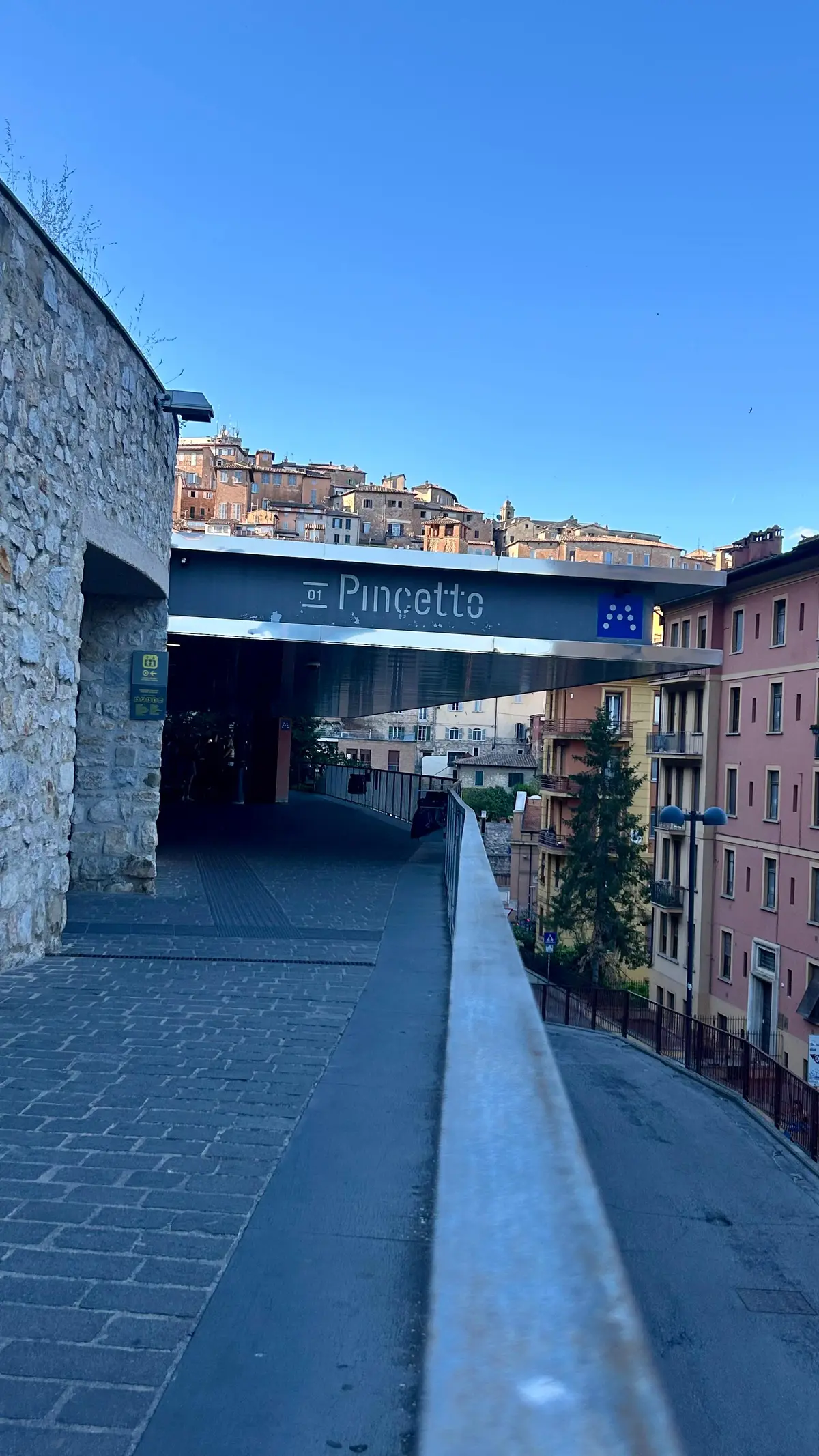
Outside the classroom, students can use university study spaces and libraries. Palazzo Gallenga, the Humanities Library in Piazza Morlacchi and the Biblioteca degli Arconi at Pincetto are among the reference points close to the central university areas.
University canteens provide an option for lunch, while supermarkets and food shops in the centre cover everyday shopping. Nearby facilities also provide opportunities for swimming, exercise and university sport.
StraOrientati runs language tandems, while the University for Foreigners hosts choral and theatre activities. Piazza del Melo also hosts music initiatives aimed at young people.
With regular use, libraries, canteens, shops and activity spaces gradually become part of everyday life in Perugia.
Culture and Events
Squares, theatres, cinemas and gardens change role as the cultural calendar unfolds.
Throughout the year, Teatro Morlacchi and Teatro del Pavone host performances, PostModernissimo maintains a cinema programme, and Palazzo della Penna presents exhibitions and other visual-arts projects.
In summer, this cultural network spreads further into the city. The cloister of San Fiorenzo and the Giardini del Frontone host open-air cinema, while squares, cloisters and spaces such as San Francesco al Prato become venues for concerts and performances.
During Umbria Jazz, the International Journalism Festival and the PerSo Film Festival, several places across the centre become part of the same programme at once. For a few days, theatres, cinemas, museums, churches, university spaces and squares take on different functions.
Across the year, cultural programming temporarily changes the use of places that belong to the city’s ordinary life.
Umbria Jazz 2026 | Official Aftermovie
Umbria Jazz (Festival)
Practical Information
To understand Perugia in practical terms, distance needs to be considered together with elevation and where you study.
The historic centre occupies the upper part of the hill. Two addresses that look close on a map may still involve steep streets, stairways or changes in elevation. When choosing where to live, the actual route matters as much as the distance.
Your place of study is the first useful reference point. Palazzo Gallenga is the main landmark for students at the University for Foreigners, while University of Perugia sites are distributed across the centre, Via Pascoli, Elce and other areas. Different neighbourhoods therefore create different relationships between home, classes and everyday services.
Many journeys within the centre are made on foot. The Minimetrò links Pincetto with Fontivegge and Pian di Massiano, while escalators, lifts and buses help negotiate changes in elevation and connect other parts of the city.
During the first few days, it is useful to test the route between home and university, identify the stops you are likely to use and locate a few essential services. This personal map quickly makes it easier to understand which areas work best for your own routine.
In Perugia, the practical value of an area depends on the route as much as on the distance.